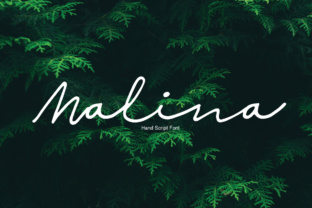
Malina: A Handwritten Script Font for Creative Branding
Opening a new brand board, I felt the familiar thrill of starting a fresh project. This time, it was a boutique identity for a local café, and I knew I needed a font that would capture the cozy, inviting vibe. Enter Malina, a handwritten script font that promises to be perfect for many occasions.
The First Impressions with Malina
As I began to sketch out the logo concept, I was immediately struck by Malina's fluid, organic lines. The strokes are graceful yet casual, giving off a warm, personal feel. This is exactly what I needed for a café that prides itself on its community and handcrafted offerings.
I tested Malina in various sizes and colors, and it held up beautifully. The letters flow seamlessly, creating a sense of movement and energy. The font's personality is both elegant and approachable, making it ideal for a brand that wants to connect on a more intimate level with its audience.
Malina in Action: Logo Design and Brand Identity
For the logo, I used Malina as the main typeface, pairing it with a clean sans serif for the tagline. The contrast between the two fonts worked perfectly, with Malina adding a touch of charm and the sans serif providing clarity and balance. The result was a logo that felt both modern and timeless, setting the tone for the entire brand identity.
Next, I moved on to the brand board. Malina's versatility shone through as I applied it to different elements. It looked equally at home on the business card, where it added a personal touch, and on the packaging mockup, where it gave the product labels a handmade, artisanal feel. The font's ability to adapt to various design contexts made it a standout choice for this project.
Performance in Packaging and Social Media
When it came to the packaging, Malina really stood out. I used it for the main product label, and it instantly elevated the design. The handwritten style made the packaging feel like a thoughtful, personal gift, which is exactly the kind of experience the café aims to provide. The font's legibility was also impressive, even at smaller sizes, though I did notice that it might not be the best choice for very fine print or long text blocks.
On social media, Malina proved to be a star. I designed a series of Instagram posts, and the font's playful, friendly nature made each post feel engaging and relatable. Whether it was a simple quote, a special offer, or an event announcement, Malina added a unique, memorable touch. The font's readability on screens was excellent, making it a great choice for digital content.
Font Pairing and Practical Considerations
One of the key aspects of using a script font like Malina is finding the right complementary typefaces. For this project, I paired Malina with a classic serif for a more traditional, elegant look, and a modern sans serif for a contemporary, clean feel. Both combinations worked well, but the sans serif provided the best balance, allowing Malina to shine without overwhelming the design.
Before finalizing the designs, I made sure to test Malina in various scenarios. I printed out the business cards and packaging labels to check how they looked in real life. The font maintained its charm and readability, confirming that it was a solid choice for the project. I also reviewed the included styles, alternates, and ligatures, which added a lot of value and flexibility to the design process.
Lastly, I double-checked the commercial font licensing to ensure that Malina could be used in all the intended applications, from the café's website to their merchandise. It's always a good idea to verify these details to avoid any potential issues down the line.
In conclusion, Malina is a versatile and charming handwritten script font that can add a personal, inviting touch to a wide range of branding projects. Its natural, flowing style makes it a great choice for logos, packaging, and social media, while its readability and adaptability make it a valuable addition to any designer's toolkit.